Stages of grief
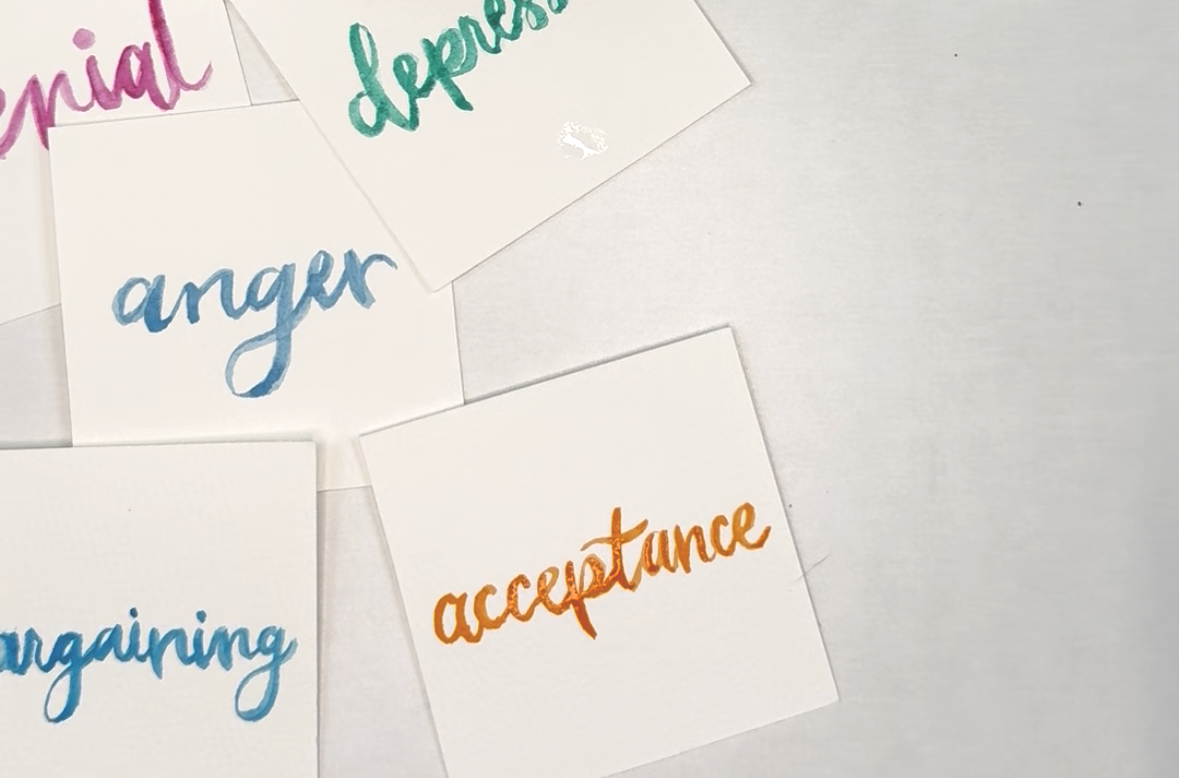
Art Prompt: Using an array of materials such as watercolor, markers, colored pencils, collage, ink, or other art supplies available to you, create an image that represents a loss in your life and a stage of grief that you feel you were getting stuck in or circling back to frequently.
Allow the materials you choose to reflect different emotional tones or layers of your experience. Some areas of the image may feel more controlled, while others may feel more expressive or unfinished.
Focus on the process of creating rather than the final outcome. Notice what thoughts, memories, or emotions come up as you work, and allow the page to hold those reflections without judgment.
Understanding the stages of grief
Most people have heard of the five stages of grief: Denial. Anger. Bargaining. Depression. Acceptance.
They were first described by psychiatrist Elisabeth Kübler-Ross in 1969 as a way to understand emotional responses to loss. But something important often gets lost in how we talk about them. Grief rarely moves in a clean, predictable order. Research and clinical observations show that people do not consistently move through these stages sequentially. You might experience several at once, revisit the same one multiple times, or skip some altogether. Grief tends to ebb and flow, rather than follow a straight path from denial to acceptance. You may feel acceptance one day and anger the next. You may sit in sadness for months before anything shifts. And that is still grief.
Another important misconception is that grief only applies to death.
In reality, grief can appear after any meaningful loss, including:
• Divorce or the end of a relationship
• Losing a job or career identity
• Moving away from a place that felt like home
• Health changes or chronic illness
• Shifts in family dynamics
• Letting go of a future you once imagined
Psychologically, grief is often about mourning the loss of what was or what could have been, not just the loss of a person. Acceptance, the stage most people think of as the “end,” doesn’t mean the pain disappears. It simply means we begin integrating the loss into our life story instead of fighting the reality of it.
If your grief feels messy, repetitive, or confusing, it is not a sign you are doing it wrong. It is often a sign you are human.
Journal Prompts
What loss came to mind while creating your image, and what made this experience significant for you?
Which stage or emotional response did you notice yourself returning to most often during that time?
Looking at your artwork, what parts of the image feel most connected to your experience of grief?
Were there moments during your grieving process when you felt like you had moved forward, only to find yourself returning to earlier emotions again? What was that like for you?
What expectations did you place on yourself about how grief “should” look or how long it should last?
Are there parts of this loss that still feel unresolved or difficult to accept today?
What have you learned about yourself through the experience of processing this loss?
If you were to add something new to your artwork today, what might it represent about where you are now in your healing process?
What kinds of support, coping strategies, or boundaries have helped you navigate difficult emotions related to this loss?
In what ways has this experience changed your understanding of grief, healing, or resilience?
Disclaimer: The prompts and reflections shared here are intended for personal exploration and creative expression. They are not a substitute for therapy or professional mental health support. For the best use, explore these directives alongside your therapeutic work. If you are in crisis or feel unsafe, please call 911 or go to your nearest emergency room. Tips for artmaking can be found on the main page of this blog.